


Party in the Sky at the Planetarium
Until September 5, the Rio Tinto Alcan Planetarium will present Dark Universe: the dark side of the cosmos and aurōrae, a double program that will reveal the
unfathomable mysteries of the
universe. In 360 degrees at the Planetarium. It is something of an open secret: in art, grand subjects attract grand scale. The larger the theme, the more we expect the artist to open the floodgates, and often the wallet, to give us a full technological and immersive spectacle. It is easy to understand that 360-degree dome projections were the most appropriate format to do justice to a subject
as formidable
as space. Dark Universe. Stretched out on giant beanbags in the Chaos Theatre, one of the Planetarium’s theatres, we are plunged into darkness before images of the universe spread above our heads. Wherever we look, we can admire stars, distant galaxies and the movements of the Hubble telescope. Among many other things, the phenomenon of redshift is explained. The farther a galaxy moves away, the more the light it emits shifts toward the red end of the light spectrum: violet, indigo, blue, green, yellow, orange and red, like the colours of the rainbow. If we observe that galaxies are moving farther and farther away, it means they were once much closer. Perhaps so close that they formed a single whole, infinitely dense and hot. That, at least, is what the Big Bang theory suggests, the event that generated the universe. This radiation is considered a fossil, a trace of the period that followed the Big Bang, 380,000 years after it began. Produced by the American Museum of Natural History, Dark Universe is certainly the more polished and technically sophisticated of the two videos on the program. After twenty-five minutes, the explanations of these facts at the origin of
the
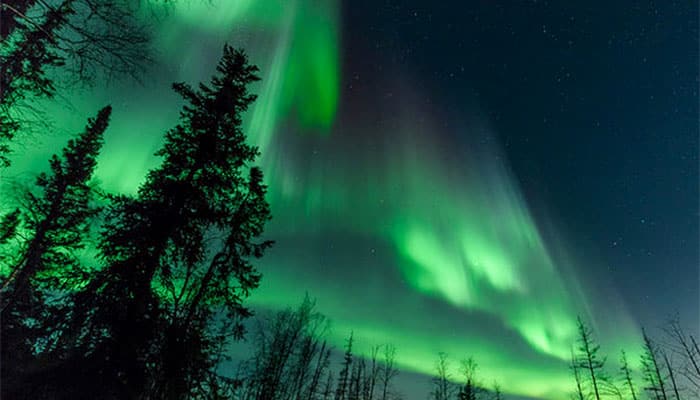
birth of our universe billions of years ago come to an end. aurōrae. We move to another Planetarium theatre, the Milky Way Theatre. There, the fascinating phenomenon of the northern lights is explained. With this show, still on a 360-degree dome, there is something more convivial. The explanations are not given by a narrator with a deep voice, but by a Planetarium employee. The theatrical and informal Bianca tells us that the northern lights are caused by solar winds interacting with Earth’s magnetic field and layer of atmosphere. Beyond this scientific information, a
great deal of importance is
given to the connection between image and music. A soundtrack by Champion. The show leaves more time to contemplate the superb images and the music created by Maxime Fortin, also known as Champion or DJ Champion. Those in the know will notice that this pop and electro composer has integrated Grand Prix, Dat Train and L’envol du ciel, pieces from his 2013 album, into the soundtrack. Between very techno kick rhythms, he leaves room for more ethereal sequences. The segment on solar winds is undoubtedly one of the show’s most successful, largely because it is supported by less danceable, more image-driven music. We are invited to dream with these northern lights, resembling sheets made of coloured light, and with the shots of Montréal that alternate with those taken in Yellowknife, in the Northwest Territories. At moments when one might expect gentler music, it is sometimes more energetic and overflows a little. However, the very end is clearly more festive, and the beats are appropriate to mark the launch of a party taking place dozens of kilometres up in the sky. In short, the Planetarium has put together a beautiful double program that will please both younger and older audiences. Description and schedule
for the double program Dark Universe: the dark side of the cosmos and aurōrae.
Translation unavailable.
Similar posts
Culture and Creativity
read the article
The Imaginary Cosmoses of Sight & Sound
In a well-hidden building with an industrial look that serves as headquarters for Eastern Bloc, I attended one of the most relaxing performances I have seen: You Never Know, also called The Imaginary Cosmoses, presented as...
Culture and Creativity
read the article
DIGITAL TECHNOLOGY WILL MAKE SPRING BLOOM
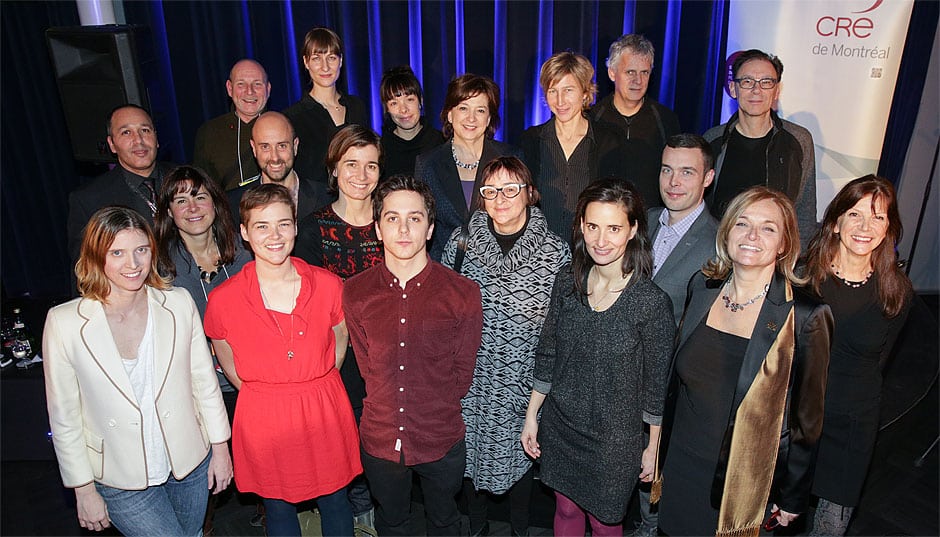
Nearly 400 people attended the unveiling of Printemps numérique yesterday at the Rio Tinto Alcan Planetarium, an initiative by the Conférence régionale des élus (CRÉ) de Montréal in partnership with organizations from the creative and digital-arts sectors.