


Safe and Secure at OVH
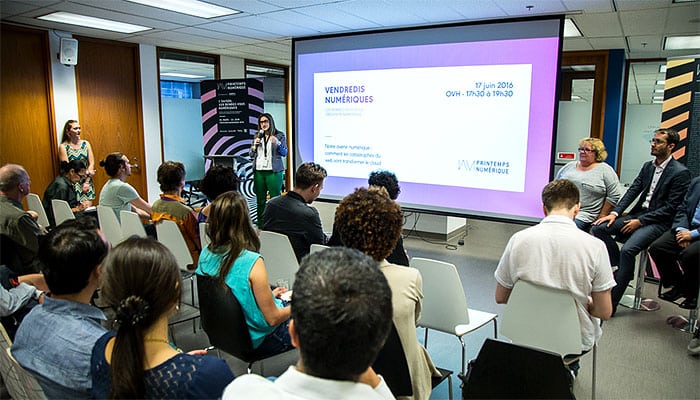
For the 6th and final Digital Friday of the spring, the meeting place was OVH’s offices on McGill College Street.
An OVH welcome. Digital
enthusiasts gathered to network and discuss the topic of the day: how web disasters could transform the cloud. With 1,300 employees across 17countries, OVH, short for On Vous Héberge, gives the geekiest of geeks the possibility of using a server. What is a server?When
you want to
access an Internet page, a signal is sent to a server, a powerful computer that can be located anywhere in the world. Whether you want to access an email inbox, a web page, a database or e-commerce, you need to pass through a network of servers. For some people, this operation is problematic because they know, at first, nothing about the server they are using: its location, owner, security and so on. They prefer to contact a company such as OVH, which rents them secure space to store their data on machines maintained with a water-cooling system. That data is said to be hosted at OVH. Most people do not worry about the mechanics of the system. For them, the cloud is so convenient that it becomes a disembodied, wonderful, almost magical object. The panelists. Is this negligence?
Five speakers
gathered around that question: Catherine Mathys, technology blogger-columnist; Maxime Hurtrel from the OVH team; Julien Galtier from The Bubbles Company; José Fernandez, associate professor in the Department of Computer and Software Engineering at Polytechnique Montréal; and Véronique Marino, director of the Interactive Media program at INIS. Web disasters: myth or reality? The

cloud is servers somewhere, José Fernandez
simply summarized. Ouruse of these servers is transparent because we interact with them without knowing it. In doing so, we ignore the real fragility of the system, the identity of the people who have access to it and how vulnerable our personal information can be. Giants from several industries have been at the centre of scandals over hacked information: Ashley Madison, Sony, the Internal Revenue Service and others. In some cases, information belonging to thousands or even hundreds of thousands of people was disclosed. Yet we continue to give personal information regularly, consciously or not. Our date or city of birth, age, gender and favourite foods are collected to target our interests and, for example, show us advertising more likely to interest us. As soon as you click a link or advertisement, that information can be recorded. When the product is free, the product is us. The fact that Facebook sells you to advertising companies has become common knowledge. Do companies have the right to make that selection of information? Absolutely, since you probably approved the terms of use when signing up or downloading the software or application. The biggest lie on the Internet, the saying goes, is: I have read and agree to the terms of use. Catherine Mathys noted that young users of these technologies accept this functioning very well. In advertising, they would even like ads to be better targeted. Fernandez countered that this is because we do not imagine that disaster is possible. By letting the Machine take control over what we see, we risk the death of Internet democracy. We are no longer shown everything there is to see, only what someone wants to show us. Marino nevertheless noted that a disaster is generally followed by a period of recovery, and that this can be beneficial. A shock is needed to raise public awareness. Like the phoenix, certain trees release the components that will allow them to grow again when they burn. Their destruction is necessary to their survival. In the meantime, the Internet is taken for granted, and it will work until proven otherwise. Facebook page for the event at OVH. For full details, consult the related page, event page, exhibition page and
Similar posts
Innovation
read the article
KITSCH.god: Immersion & Spirituality
KITSCH.god arrives at the Studio de l'Espace Libre this weekend with an original multidisciplinary show. KITSCH.god is built around...
Innovation
read the article
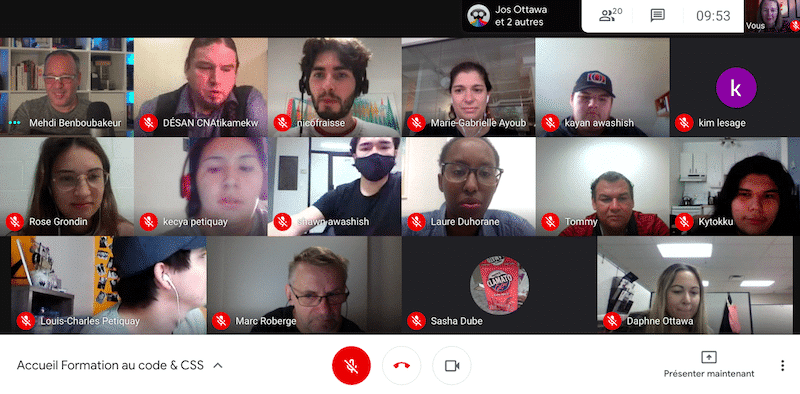
Coding Workshop with the Atikamekw Nation: Exploring the Possibilities of Digital Technology
Montréal, November 2, 2020 — To support the development of digital literacy skills among young people and promote equal opportunity in digital technology, Printemps numérique collaborated with the Conseil de la Nation Atikamekw on...